Modular Construction: Where It Works—and What It Truly Takes to Deliver
We don’t treat modular as a separate delivery model—we treat it as part of a fully integrated process.
Modular Construction: Where It Works—and What It Truly Takes to Deliver
By Ken Summers, Vice President, Preconstruction
Modular construction is having a moment.
It’s being positioned as a faster, more efficient way to build, particularly in markets facing housing shortages and cost pressure. And in many cases, that’s true. But modular is not a shortcut. It’s a different way of delivering construction. And like any delivery model, its success comes down to execution.
At Build Group, we’ve spent the last several years working across both traditional and modular delivery. What’s clear is this: modular can be incredibly effective in the right context—but only when the fundamentals are aligned. Just as important, it only works when the right partners are aligned around a shared standard.
Where modular delivers real value
The strongest use case today is affordable housing. That’s where speed, repeatability, and scale matter most. When you can standardize the product, align design with manufacturing, and streamline installation, modular becomes a powerful tool.
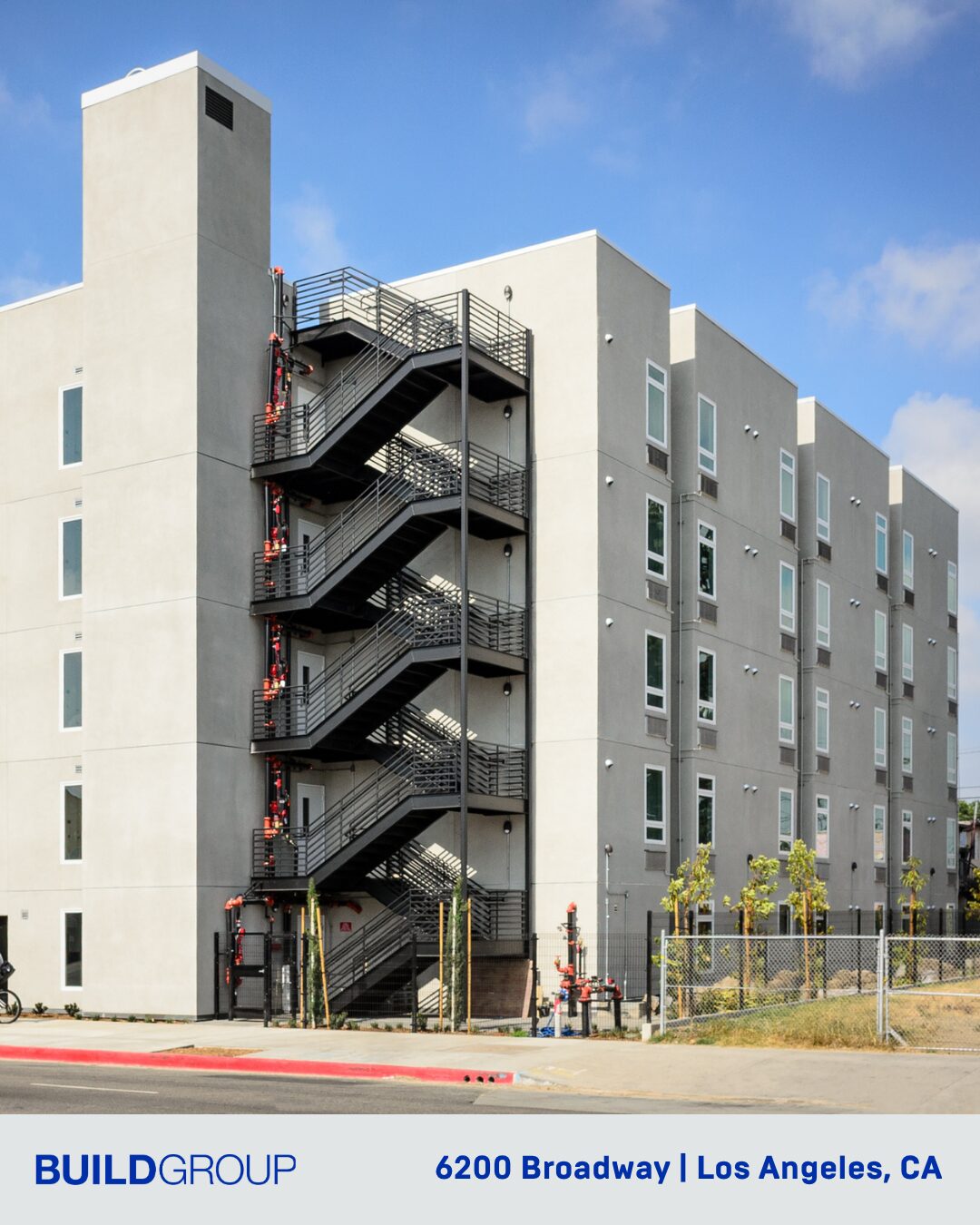
We’re seeing that firsthand on a modular, affordable housing project in Los Angeles, where we’re proud to partner with two organizations proving what modular can do when it’s done right: SoLa Impact, the developer, and Model/Z, the manufacturer.
SoLa Impact is one of the most respected mission-driven developers in the country—a minority-owned firm that has become Los Angeles’ largest privately funded affordable housing developer, with a double-bottom-line model that pairs financial discipline with real community impact. Model/Z, SoLa’s Los Angeles manufacturer, was built by former aerospace and automotive engineers who brought industrialized precision to housing. From its factory in the Watts neighborhood—staffed largely by workers from the surrounding community—Model/Z produces standardized, volumetric steel modules on a repeatable chassis, with dramatically less material waste than conventional construction.
Using those steel modules, once the site was prepared, the structure went vertical in a matter of days—work that traditional methods would measure in months. That kind of acceleration doesn’t eliminate the rest of the work, but it fundamentally compresses the schedule. In the right environment, with the right partners, modular construction allows us to move at a pace that traditional methods simply can’t match.
Why execution matters more than the method
One of the biggest misconceptions about modular is that it simplifies construction. In reality, it redistributes complexity.
Instead of solving challenges in the field, those decisions move upstream—into design, manufacturing, logistics, and coordination. Every interface has to be resolved earlier. Tolerances are tighter. Sequencing is less forgiving.
That’s where Build Group’s precision at scale approach becomes critical.
We don’t treat modular as a separate delivery model—we treat it as part of a fully integrated process. From early design collaboration through self-performed scopes such as concrete, to final installation and finishing, success depends on continuity across every phase. It also depends on tight coordination with the manufacturer—in our case, working hand in hand with Model/Z so that what’s engineered in the factory installs cleanly in the field.
When that alignment is in place, modular performs. When it’s not, the risk increases quickly.
Why has the industry struggled to scale modular
Modular construction has experienced several false starts. Some early players moved too fast—building factories and ramping up production before fully addressing process, quality, and coordination issues. This caused hesitation among developers.
The financial model also requires a shift in mindset. Unlike traditional construction, modular often requires significant upfront investment. Modules must be produced, stored, and ready before installation begins. That changes cash flow and introduces new planning considerations.
And in many cases, the cost advantage has not been as clear as expected. If modular delivers similar pricing to traditional construction—but with added complexity—developers will default to what they know. That’s exactly why the SoLa Impact and Model/Z model is worth paying attention to: by owning the manufacturing and standardizing the product, they’ve built the process discipline that so many early modular efforts lacked.
Navigating real-world constraints
There are also structural realities that shape how quickly modular can scale.
Regulatory frameworks are still evolving. Many modular projects operate under a hybrid approval system, with state oversight of the modules and local jurisdiction governing the rest of the project. That can create friction.
Labor dynamics and supply chain volatility also play a role. Changes in sourcing, tariffs, or production capacity can quickly impact feasibility.
These are not reasons to avoid modular—they are realities that need to be managed.
Where Build Group sees the opportunity
Modular construction will not replace traditional building methods. But it will continue to gain ground—particularly in segments where speed, repeatability, and predictability are critical.
At Build Group, we view modular as one of several tools we offer our partners to address complex challenges. The value isn’t just in the technique itself—it’s in how effectively it’s carried out, and in the strength of the partnerships behind it. Our work alongside SoLa Impact and Model/Z reflects exactly that: a developer with a clear mission, a manufacturer with industrialized precision, and a builder who can integrate the two into a finished project.
Our ability to self-perform key scopes, integrate early in the design process, and maintain control across the lifecycle positions us to deliver modular projects with the same discipline we bring to every project.
Modular construction isn’t about changing how we build—it’s about expanding how we deliver.
The Bottom Line
Modular construction is not a silver bullet. But it is an important part of the industry’s evolution—especially as we look for ways to deliver housing faster and more efficiently.
The opportunity isn’t in chasing the trend. It’s in understanding where it works, aligning the right partners, and executing with precision. Our partnership with SoLa Impact and Model/Z in Los Angeles is proof of what’s possible when all three come together.
At the end of the day, whether a project is modular or traditional, the outcome is the same: deliver a space that performs, meets expectations, and contributes to the communities we’re building.
That’s the standard—and the responsibility—Build Group brings to every project, from foundation to finishes.