
The Math Stopped Working
I've been in this business long enough to know that costs go up. That's not news, and it's not an article. What's different right now is the shape of the increase, and the fact that it's outrunning what the market can absorb.
Let me put real numbers on it, because vague concern doesn’t help anyone underwrite a project.
Labor is the line item nobody can hedge
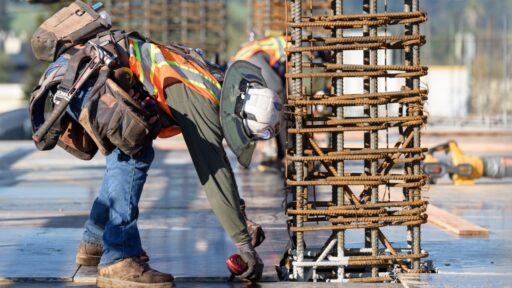
The California Department of Industrial Relations publishes predetermined increases, which means we know what’s coming before it arrives. For Northern California carpenters, the scheduled increase was $5.07 per hour effective July 2025, followed by another $5.32 effective July 2026. That’s over $10 an hour in two years, in one trade.
I want to be clear about something: I’m not arguing these increases are unearned. Skilled union labor is the reason our projects come out of the ground safely and correctly, and the training pipeline those agreements fund is the only thing standing between this industry and a genuine capability crisis. Associated Builders and Contractors estimates the industry must attract 349,000 new workers this year and 456,000 in 2027. And the shortage is already showing up on job sites: 87% of contractors have craft positions they can’t fill, and 42% say worker shortages have delayed projects.
This isn’t mainly a tariff story. Tariffs play a role, but what we’re really living through is general inflation compounded by the rising cost of labor. From 2020 to 2025 we absorbed roughly 20% general inflation over four years, on top of far steeper increases in materials, and it isn’t going away.
Ronald Yen, Executive Board
Build Group
The problem isn’t the wage. The problem is that wages are compounding on a fixed schedule while the market’s willingness to pay is not.
Materials went from volatile to structurally higher
Here’s where the numbers get genuinely uncomfortable.
The Bureau of Labor Statistics producer price index for steel mill products stood at roughly 325 in February 2026, near the top of its historical range and up materially year over year. Fabricated structural metal, bar joists, and rebar jumped 16.6%. Ready-mix concrete is at roughly $200 per cubic yard, up 2% year over year, which sounds modest until you remember that a 2% annual increase compounds quietly, and that CMU block is up 7.3%, a 34% cumulative increase over three years.
Nonresidential construction input prices surged at a 12.6% annualized rate in the first two months of 2026, the fastest pace since early 2022.
Anirban Basu, chief economist at Associated Builders and Contractors, put it plainly: materials prices overall are up 48% from February 2020 to March 2026. For architectural and structural metals, it’s 75% since February 2020.
AGC’s economists have been even more direct about what it means for contractors specifically: construction input costs are rising much faster than contractors’ bid prices, and the gap between the two will eventually have to be passed through to owners.
And here’s the part I want to be clear about, because it’s widely misunderstood. This isn’t mainly a tariff story. Tariffs play a role, but what we’re really living through is general inflation compounded by the rising cost of labor. From 2020 to 2025 we absorbed roughly 20% general inflation over four years, on top of far steeper increases in materials, and it isn’t going away. Demand-driven spikes ease when projects slow. This kind of structural, inflation-and-labor-driven increase does not. Cushman & Wakefield described the market as settling into a structurally higher-cost environment requiring recalibration of underwriting and feasibility thresholds. That’s the right word: structural, not cyclical.
What “outpacing the market” actually means
Northern and Southern California are experiencing this differently, and it’s worth naming.
Up north, the market-rate residential picture in San Francisco has effectively come to a standstill. Cost escalation stacked on already-peak rents has pushed new development past the point where the math works. The best buildings in the city are achieving roughly $7 to $8 in rent per square foot, and developers are now underwriting proformas at $9 to $10 rents. Outside of subsidized, HUD, or Low-Income Housing Tax Credit (LIHTC) funded housing, very little market-rate product is moving.
Southern California is the surprise. There’s more market-rate activity in Southern California than in the SF Bay Area, in large part because of differences in regulatory and permit-approval processes, and in the cost of labor. Take rebar as an example: the material itself runs about the same in both regions, but the wage gap between a Northern California ironworker and the Southern California counterpart is dramatic. Same material, very different installation cost, which in some cases creates a 10 to 15% price differential between building in Northern California versus Southern California.
That gap is really a cost-of-living story, and it feeds itself. Higher wages let people pay higher rents, higher rents force every business, from the restaurant to the subcontractor, to charge more to cover their own costs, and those higher costs cycle right back into what it takes to build. And as construction costs climb, they get passed on to the end user, which makes it harder and harder for the working man to live anywhere near where he’s building.
Both regions are hitting a version of the same wall: escalation is outpacing rent growth, outpacing absorption, outpacing what pro formas were built on. When input costs rise faster than the revenue side of the model, projects don’t just get more expensive. They move from delayed to dead.
What we’re doing about it at Build Group
Four things, and I’d encourage every owner reading this to push their GC on all of them.
- Honest numbers in today’s dollars. It starts at procurement: price the project in current dollars, not last year’s. A budget built on yesterday’s pricing is fiction, and the most expensive place to discover that is at GMP.
- Treat the budget as a liability, not a wish. A number you can’t defend is a number that will hurt you. Underwrite it like it’s real, because it is.
- Bring the experts in early. During preconstruction, get the people who actually build the work into the room for value engineering. Question everything, and make the decisions early. An inefficient design or the wrong skin is far cheaper to fix on paper than in the field.
- Lock in hard. Where you can pre-buy or lock pricing, do it. Mechanisms exist to secure material costs ahead of installation, and in a market moving this fast, a price held is a risk retired.
The part I want to leave you with
The instinct in a market like this is to wait for it to settle. I understand the instinct. I’d push back on it.
Nothing in the current data suggests a return to 2019 pricing. What the data suggests is a new baseline, and the projects that pencil are the ones where the owner and builder got honest about the numbers early, deliberately shared the risk, and stopped pretending the old math still works.
We’re not going to solve escalation. But we can stop being surprised by it.
What are you seeing on your projects? I’d genuinely like to know whether this matches your experience.
Original Article Link (may require registration):
https://www.linkedin.com/pulse/math-stopped-working-ronald-yen-ooiuc/
About Build Group
Build Group is a general contractor, construction manager and design-builder delivering complex projects with precision at scale. Through an integrated team and extensive self-perform capabilities, the company serves clients across multifamily residential, commercial, technology, life science, advanced manufacturing and other mission-critical markets.
Media Contacts
For media inquiries or interview requests, please contact Build Group at press@buildgc.com.
For marketing inquiries, please contact marketing@buildgc.com.